Friday, June 27, 2014
Visiting the Dark Side...A Review of Brownout presents Brown Sabbath (Ubiquity Records)
(photo by focalchrome)
This is the highly publicized Black Sabbath tribute from members of Brownout and Grupo Fantasma. I have seen both of those bands several times and have been continually amazed by their tight live shows with swingin' horns and rippin' grooves. Intrigued further, I decided to gain access into their world and tried to find out what makes them so sick.
I was told to meet them in some late night Texas heat (I took a left at the longhorn, vultures circling). When I arrived on the scene there was a wicked feeling that came over me. The entire area was reeking of witches' herbs and I was told to sit tight and wait for a Brownout rep. I could see the flickering night sky and lots of smoke from fires burning just yonder. Guitarist Beto Martinez met me and he seemed different than usual. I had never noticed his fangs before! I assured him that I was ready for whatever initiation awaited me. He led me into the Brownout camp and I felt the chills as we walked past a boiling pit of something. Beto explained that they were cooking up a concoction of goat blood, wax and the boiled remains of record industry do-wrongers. "That splatter vinyl Brown Sabbath 10" you have? It is made from this stuff." Wow. I took warning.
As we passed a line-up of virgins awaiting initiation from bassist Goyo, I could make out some voodoo rhythms. As we got nearer, I could see the trance that percussionists Sweet Lou and John Speice were in, playing batás, congas and drumkit to awake the evil spirits. Speice in particular was scary with his burning eyes and his beard totally on fire. These dudes looked like serious mad men! And I spotted a black-cloaked figure over on the side. On closer inspection it was none other than Adrian Quesada, mixing the Brown Sabbath music by torchlight! This whole scene was giving me the heebie-jeebies. Trumpeter Gil told me, "This is how we get ourselves ready for all the shows we do. We have to sacrifice animals and sometimes people too so that we can get the vibe right. In fact, just last night we nearly sacrificed our trombonist Speedy until he stepped forward and blew a tremendous solo. It was that action only that allowed himself to be saved from slaughter." I heard evil laughs all around. As the band moved toward me I got the feeling that I should escape. I took off running, trying to get off this evil ranch. I sped past zombified cattle and petrified cacti. The only time I even dared to look back I saw Beto with a bat head hanging in his mouth and vowed from that day on I would never, ever inquire about a band's pre-gig rituals ever again.
And the album? Fucking great, a sonic dream come true. If you are a child of heavy music like I am then you may find excitement in Sabbath tunes played with batá and funk horns. "Iron Man" in particular is given epic treatment here. "Hand of Doom" thrills like a good horror flick, pushing you into madness. "Planet Caravan" is a smoky trip. The best part about this awesome concept is that it remains very Sabbathy, not some gimmicky funk bullshit trying to force someone else's music into what it is not. The guitars are still heavy (Beto said he started playing guitar because he wanted to be in a metal band: this is the closest he's come.) This is very clearly a work of appreciation, not novelty. And perhaps making it lifestyle might be the ticket to better understanding the black (or brown) arts. And why is there not vocals on every song? Probably because both singers got their organs ripped out and eaten backstage on the last tour. I am glad I got to see this monster project before the true darkness prevails on all of us. The LP, the 10" and the live show are all evil. Do it. Do it. Do it...
Brownout website here
Ubiquity Records here
Author: Andujar
Thursday, June 5, 2014
Peace & Rhythm's Interview with Jim Thomson of Electric Cowbell
Jim Thomson is an enthusiastic promoter of music, with a hand in booking, producing and distributing the wide variety of sounds he digs. A percussionist with several notable ensembles (discussed within), his Electric Cowbell label puts out (mostly) 7" records with seemingly no stylistic boundaries. Since 2009 the label has released "a marching band that thinks it's a rock band" (Mucca Pazza), a funk band with people from USA Is A Monster (CSC), an Ethiopian groove band (Debo), a progressive salsa band (Bio Ritmo), a collaborative 7" with ESP-Disk (Talibam!), a record by Greg Ginn...and that is just a tip of the iceburg! We present to you Jimmy T of the brain-jolting Electric Cowbell:
(Photo by E. Brady Robinson, courtesy Jim Thomson)
Could you give some background about growing up, your early years and how you got into being involved in music.
I
grew up on an apple orchard in the Shenandoah Valley of Virginia. I was
the youngest of four brothers. My two oldest brothers were
significantly older by 13-15 years. I was born in 1966 so when I was
becoming more aware of pop culture and music outside of nursery rhymes
and bible school, it was my brother's and their teenage tastes that
influenced me the most. They also had a band that practiced in one of
the barns on our farm. They were playing Jimi Hendrix covers. It was extremely exciting for me to listen to the music
outside the door of where they were jamming. I thought everything about
rock and roll was cool. A Christian rock group by the name of Flame
visited our church and gave a concert once. It was loud and I loved it. I
didn't start playing music myself until I was about 14.
What were some bands that you grew up listening to?
Like
I mentioned, my brothers were influencing me quite a bit. They were
into Hendrix and a lot of Woodstock type stuff. Plus Leon Russell and
Edgar Winter. Of course there were The Beatles. They weren't much into
The Stones though. I first got into the 45's because we had a little 45
player there in the house. There were lots of Beatles records but also
The Zombies and some British Invasion stuff. It wasn't until I was about
12 that I started going next level. My friend's older brother's record
collections seemed to hold a lot of mysteries. But it was staying up
late and watching Saturday Night Live that expanded my mind. I remember
specifically watching Joe Jackson give a punky performance on American Bandstand and seeing The Specials on SNL. That really twisted things up. I had no idea what I was seeing or
hearing. No reference point really other than there was a lot of
bouncing up and down and wild energy. Then I found a Specials record in
one of my friend's big brother's record collections. The graphic design
and style of the band made an impact on me. One of my girlfriend's had a
big brother who was really into Black Sabbath. I remember getting Master of Reality by Black Sabbath as a birthday gift when I turned 13. I
relied on DC radio stations as well. Washington, DC was about 65 miles
east of the farm. Back then the jocks were playing more than just the
hits on the records. DC101 was decent. I was also addicted to listening
to American Top 40. Then WHFS came along, at least I started picking it up. They were playing new wave stuff like Ultravox, Kraftwerk, Simple Minds, and stuff like The Buzzcocks in the early 80s. During high school I used to listen with a pen and
paper nearby. The next biggest town near the farm was Winchester,
Virginia. There were a couple record shops and department stores that
had records and tape sections. The import sections were where stuff like
the Dead Kennedys would be. I remember seeing The Jam and Sex Pistols records in there
and also Joy Division. The imports were expensive and too risky for me
to purchase without knowing what was on there. By my junior and
senior years in high school I had graduated from my big brothers'
influence and even that of my peers. I prided myself on not having the
standard issue commodities that the other students had but I was also
getting something in the transmission of the alternative stuff I was
seeking out. I couldn't find myself comfortable with any one identity:
punk, ska, mod, rocker, metal head. I liked too many things that were
all over the place. At the time it bothered me that I couldn't pick an
identity. Looking in the rear view mirror now I'm glad I couldn't. I
used to go see The Fleshtones at the old 9:30 Club in DC. They were awesome. Sometimes more punk
bands would open for them. I think I saw Black Market Baby on a bill
with them. I thought it was great. I also saw the first Bad Seeds tour
with Nick Cave around that time. I randomly just happened to be hanging
out at the club that night. It was another "WTF?" musical moment.
Could you talk about your time spent in Gwar?
Gwar was something I kind of fell into. There was, and still is, a vibrant
music and art scene in Richmond, Virginia, where I went to college in
1984. It was quite a change of pace from the DC scene. It seemed more
relaxed at the time. Death Piggy was sort of a hardcore band with a
slapstick sense of humor that was fronted by Dave Brockie who was a huge
creative force in the scene. We were all just trying different stuff
out at the time. We shared practice spaces in an old dairy plant that
used to bottle milk and make ice cream. I was playing in an instrumental spazzy rock band called the Alter Natives. We slipped into the Gwar costumes for a while before Greg Ginn signed us to SST Records. I returned to do some touring with Gwar a couple years later. My character's name was Hans Orifice.
(Greg Ginn 7" on Electric Cowbell)
What about some of your other musical projects?
(Greg Ginn 7" on Electric Cowbell)
What about some of your other musical projects?
It's
definitely not a straight path. One thing just led to another. By the
time the Alter Natives disbanded in 1991, I was wanting to go further
into drumming. I'd heard the Kodo drummers from Japan and heard they more or less lived together on an
island or something. I couldn't think of anything better than to be that
committed. But I lacked the discipline to do something like that yet I
was still committed. I had read Drumming at the Edge of Magic by
Grateful Dead drummer Mickey Hart and was inspired that this rock
drummer had gotten into the shamanistic aspects of drumming. Around the
same time Joseph Campbell had done that famous interview with Bill Moyers, Power of Myth. And I was reading other articles and books on various
drummers and connecting this spiritual dimension to my whole path. I was very interested in vodun and trance. I was connecting everything through this lens at the time.
There were industrial groups like Test Department and artists like Z'ev and his RHYTHMAJIK philosophy.
Hip Hop as well. I just saw all this popular and underground music tied
in with this continuum of rhythm that connected humanity, not in a "we
are the world" kind of way but that there were invisible forces at play
that could be tapped into. The lines between subjective and objective
were often blurry for me in those days.
Have you ever worked on making music for movies?
Not really. I have approached music with cinema in mind for sure but never deliberately scored music for film.
What was your path into latin and african music?
It probably had a lot to do with my interest in vodun. I was also an avid reader of liner notes on the backs of LPs. I used to do manual labor for this older hippy in Richmond, Virginia. When CDs came out he replaced his entire record collection and essentially gave
me all his old records. There was tons of killer stuff in there. Out to
Lunch by Eric Dolphy, Mingus, tons of later-era Coltrane, Miles. I liked Santana too and always noted the rhythm section, especially with Armando Peraza. The library was another spot where I started coming across percussion records. Then I bought a record by Mongo Santamaria called Yambú. It was a heavy hitter. I didn't even know about him as a latin jazz or
pop artist who had a hit with his version of "Watermelon Man." This was
deep and dark stuff. Around the same time I met two of the founders of
Bio Ritmo-Jorge Negron and Rei Alvarez. They hipped me to all the Fania stuff. I wanted to start
playing hand percussion too but I didn't want anything to do with the
hippies in the drum circles with their Guatemalan sandals with their djembe drums. But I thought the Afro-Cuban stuff was slick and bad ass. There was the guy who was like a spiritual elder for those early days of Bio Ritmo-Miguel
Valdez (RIP). He lived in Richmond and had played with Dave Matthews
Band (barf) and The Brand New Heavies. He was a Cuban who had some
relatives who lived in Richmond. I really never knew where he came from or why he was there but meeting him changed my life. I only had maybe three lessons from him, most of which was just talking. He was a santero. His family had ties to Yoruban
religion. He was one of the most musical souls I ever met. He partied
very hard too. So hard in fact, that he died of liver failure not long
after I had met him. His wake was heavy. I felt some tingling in my body
during the ceremony where his family
and some drummers sent him off. If you're interested in drumming and
it's origins it all goes back to Africa or comes from Africa, so
naturally as my interest in drumming expanded, it led me to Latin and African music.
I am a big fan of Electric Cowbell. What was the original inspiration and idea behind the label? Are there any musical boundaries at all?
I was living in New York City. I felt a bit aimless at the time. I wasn't depressed or anything but I was looking for some new kind of kick in the ass. Wasn't sure
what I was going to do next. Being in a band wasn't as simple as it used
to be when I was younger. I had answered some ads on Craigslist to jam with people but nothing was clicking. A friend of mine called me up and told me they were putting together a funk band to open for another friend's band who were on tour. They were doing Sun Ra covers off of Lanquidity and some covers of some African funk reissues. I was in. It was a racket and we played a couple loft parties. We weren't supposed to be a band really but we kept doing gigs and named ourselves CSC Funk Band. Daptone was in high gear at the time along with the Truth and Soul record label. I liked the overall aesthetic and the fact that they put out singles. I saw lots of DJs with their 45 boxes. I remembered John Peel had that box of 148 45s or whatever. I just liked the emphasis on recording a 7" 45RPM record. You had less than five minutes to do your thing. It made the CSC Funk Band self-edit these extended psychedelic jams into a distilled piece of essence. This is when and why I started the label. We recorded two songs: "Bad Banana Bread" and "Caneca" in a basement in Bushwick. I took the singles around to local record stores in Brooklyn and Manhattan and got really good feedback from the clerks. Then I started looking for distribution. The distributors were like, we don't really have time for you unless you have a catalog or something. That's when I started rallying my contacts to make 45s: Spanglish Fly, Bio Ritmo, Debo Band, and Superhuman Happiness were some of the first.
When you find an artist you'd like to present on EC how do you go about doing it? Is there a basic template you work with? Do you give royalties or records to the artists?
There's no boundaries really. I mean a 45, especially now, is a hard sell. I imagine DJs out there like myself who like to spin 45s. If it's too weird or doesn't have a groove or solid backbeat, it might not make into the Platter-Pak for a DJ
set. When I buy 45s I'm thinking about that. I am imagining dropping
it at a party. Will it clear the floor? But basically my template is an
extended network of like-minded friends and community. I really don't
crank out the releases. I have to be able to enjoy the process of a
release: working with the artists, the designer, setting up the
manufacturing. It's a creative act that I find nourishing. It's rare I
take a demo. I have before like with Karthala
72 but that was an exception because it's exceptional music. We do
royalties but it's not like you get a check with your royalties. It's a
50/50 deal. I normally can't afford to front production costs so I
always compare it to baking a cake together. This is after the group or
artist have already recorded. I don't know many labels who give out
recording budgets anymore. But I get everyone involved in a project like
we're baking a cake together. I might bring 30% of the ingredients and
they bring 70%. Once the record comes out of the oven we divide them
according to what each of us put in. I generally don't make much as I
keep the price as low as possible for distribution. The band has a much
better chance of making their money back with mark-up and selling their
product at shows. I hardly ever do digital. There's just too many
spoons in the soup to make streaming revenue work for multiple parties.
My feeling is that the bands should run their own digital. I have some
of the catalog available for streaming but that's really just to keep
the brand out there and accessible to people everywhere.
How many items are in the catalog? What is forthcoming?
We're at about 30 releases right now. We've got the new Zongo Junction 12" dropping in July. Great afrobeat group from NYC but
there's something that separates them from the pack. I don't want to
just say they're more experimental but there's a lot of different
elements at work on their new record that I really connected with. Also we're releasing NAWA: Ancient Sufi Invocations and Forgotten Songs from Aleppo as
a collaboration with Lost Origins of ancient Sufi chants recorded in
Syria in 2009. We released it initially on Record Store Day 2014 but it
sold out and then some. So we're going to repress and re-release.
Are there any particularly best-selling titles in the catalog?
Karthala 72, Bio Ritmo, CSC Funk Band, Spanglish Fly but I wouldn't say there's real best-sellers.
Does the label make enough $$ to sustain itself or do you have to put in out-of-pocket at times?
Both. It's always a case-by-case scenario.
Have there been any favorite labels that you trust for quality through the years?
Sure.
There was SST before they signed my band! Factory was of course great
at one time. Nowadays I look to NYC Trust and most of the labels we have
on Independent Grand: Daptone, Soundway, Sofrito, PPU, Omega Supreme, Black Pearl, Wonderwheel and more.
You are involved with the Independent Grand online store. How did this come
about? Could you explain the philosophy and desire to distribute other
labels' vinyl?
I'm friends with NYC Trust guys. Each of our labels have had a moderately successful self-run webshop on our
respective websites, but the aim of Independent Grand is to provide a 1-stop
shopping destination to help combat some of the recent & evil USPS
postage hikes by offering a greater amount of stock to customers. As the
new rates reflect, bundling multiple records saves greatly on postage,
most especially for those overseas and in Canada.
You are involved with booking music in the NYC and DC areas. Could you elaborate on that?
In
addition to a reaction to this unfortunate USPS mandate, Independent
Grand was formed to provide a unique and curated selection of records
and labels. Stock is limited and specifically chosen to promote and
support the business and culture of like-minded independent vinyl labels
and small-run record releases. It's kind of a power in numbers move.
You are involved with booking music in the NYC and DC areas. Could you elaborate on that?
It's a hustle. It's also a
natural extension of what I do: promoting and servicing music that I
like or that I feel like has a value in it. But I work mostly with
emerging artists. It's likely that I'll be promoting groups that are not
as well-known. Sometimes I feel like I need a gimmick or a chicken suit
to wear to get folks to check out a great new band or an unknown group from Mali or whatever.
As you are somebody who not only plays in bands but also produces records for others and presents concerts, what do you feel you need to provide for an artist? What types of standards do you like to see in regards to treatment of artists at concerts and for recordings?
This
is pretty simple for me. Respect and support. Be kind and courteous
when you can. You do need some tough skin sometimes because dealing with
presenting in night clubs can be tedious and fraught with peril. I find myself trying to shield artists from the dark side if like I'm dealing with a club owner whose out of his mind on cocaine and booze but at the same time I remember reading Miles Davis's or James Brown's autobiographies. The night club business is historically joined at the hip it seems with the lowest and highest forms of life. It's like a cosmic dance. If you can't get some perspective or be able to laugh at it, you will go crazy.
Who have been the most exciting artists you have heard in recent times?
Tal National, Janka Nabay, Oumar Konate. Seems like my mind is being blown by lots of West African music these days.
What forthcoming projects can we look forward to?
Zongo Junction 12" dropping in July. It's called No Discount.
Besides the music, what are some of your other personal interests?
Writing occasionally. Watching Youtube. Reading books. Hikes and beaches.
Could you recommend a favorite current restaurant or two?
Merkato Ethiopian in DC and The Greek Spot.
What have been your favorite cities you have lived in or visited?
Name a few records
that you count among your all time favorites (any style, genre, era).
This list can change at anytime on any given day:
--Motorhead No Sleep Til Hammersmith (Mercury-US)
--Bad Brains (ROIR) cassette
--John Coltrane Live at the Village Vanguard (Impulse)
--Minutemen Double Nickels on the Dime (SST)
--Tito Puente Dance Mania (RCA Victor)
--King Sunny Ade Juju Music (Mango)
--Joy Division Unknown Pleasures (Factory)
--Slayer Reign in Blood (Def Jam)
--Tom Waits Rain Dogs (Island)
Electric Cowbell can be found here, here, here, or here. And if, after that, you need more Electric Cowbell, than you can archaically shoot an email to electriccowbell45@gmail.com.
Peace & Rhythm can be reached at peaceandrhythm45@gmail.com (two doors down on the web).
Post author: Andujar
Friday, May 30, 2014
Peace & Rhythm's Interview with Chuck Nessa of Nessa Records
Chuck Nessa is the man who birthed the Nessa Records label. Operating out of Chicago starting in the mid 60's, Nessa supported the up-and-coming musicians from the AACM (Association for the Advancement of Creative Musicians) and issued artifacts from the avant-garde of jazz/modern creative music including such seminal albums by Roscoe Mitchell, Lester Bowie, the unsung Hal Russell, Von Freeman, Air and others. An underground rare groove classic by the Art Ensemble of Chicago ("Theme de Yoyo") finds its home on an early Nessa release. Today, the label is still producing exciting new music and we check in with Mr Chuck Nessa:
Could you give us some background about growing up, your early years and how you got into being involved with the music.
I was born in 1944 and grew up on a farm in central Iowa. In the mid-fifties I was into Elvis, Little Richard, Fats Domino, Jerry Lee Lewis and the like. By high school I was branching out to jazz records. Armstrong, Ellington, Gillespie and Rollins were early experiences. I had failed at piano lessons and trumpet lessons because of my own impatience. I couldn’t advance fast enough on the instruments but my ears were advancing at warp speed.
What was your main function at Delmark Records in the early days? Do you still maintain a relationship with Delmark's Bob Koester?
Delmark and the Jazz Record Mart both operated out of the same storefront at 7 West Grand Ave in Chicago. The staff at the time was Bob, Lynne Ludy (book keeper and store clerk) and for a while the shipping clerk was Kunle Mwanga. I was hired as store manager. I took the job with the understanding I could sign three artists to contracts and record them. I signed Roscoe Mitchell, Joseph Jarman and Muhal Richard Abrams. I started working there in the Spring of ’66 and lasted exactly one year.
There were hard feelings when I left and we didn’t speak for a few years but when I moved back to Chicago in 1975 all was forgiven. I have been using the Delmark studio for almost all of my CD reissue projects.
Nessa Records played a crucial role in documenting the early AACM artists. What inspired you to start producing the sounds of the Chicago scene back in the 60s?
This is partially covered above, but my interest was initially stirred by the reviews of AACM events in Down Beat by Pete Welding. When I moved to Chicago and went to work I sought these musicians out. When I left Delmark in 1967 Lester Bowie and Roscoe Mitchell convinced me to start my own label.
Did you find a camaraderie amongst the labels also producing this strand of music in the 60s and 70s or was it competitive?
Generally there was friendly, respectful competition. I was closest to Bill Smith and John Norris at Sackville and Bob Cummins of India Navigation and today I am friendly with Bruno Johnson at Okka and a couple others.
You had told me that at one point in the later 70s Nessa had some kind of P&D deal through Flying Fish.
Fish handled my distribution for a around three years at the end of the ‘70s They had a much larger network than I did and we both thought it would be beneficial. Ultimately we discovered my records sold fewer copies than their folk and bluegrass so we parted ways. Nothing more complicated than that.
What were some of the biggest challenges through the decades on maintaining the label from a business standpoint? Have you had many paid employees or have you done most of this yourself?
Never could afford employees. The label was supported by my various day jobs and the indulgences granted by my wife and kids. My wife Ann started designing covers and taking session photos in the late ‘70s and this was a huge financial aid.
From radio to trade magazines to blogs, what kinds of challenges have you had to deal with in getting word about your releases out? Have you preferred any one way over another through the years?
Back in the 60s – 80s press reviews and a few radio stations made a difference. Not sure anything really works today.
I've often heard stories about music distribution in general suffering in recent times, be it economic climate, changing tastes or internet-sharing in ways that artists and labels don't make money. However, from what I can tell it seems that the jazz/avant/new music (whatever someone wants to call it) still has a fairly healthy record-buying audience. Do you find this to be accurate from your standpoint?
All of the above. The old paradigm is gone and artists are making recordings for nothing more than a few discs to sell at gigs. It is a travesty and could ultimately damage the music itself. Not much is healthy about this in my book.
Do you have any strong opinion on the usage of the word "jazz"?
Not really. It seems to be an easy device for identification. I understand others objecting but it works for me.
In regards to operating costs, do you use a typical arrangement for producing a record for an artist? For example, do you pay for the studio time or license already-made recordings? Do you have a structured royalties arrangement that you like to use as a template or could the arrangement vary from project to project?
Yes to all the above. Almost every project is different.
Are there any particular global markets that your releases have fared best in?
North America, Europe and Japan – in that order.
What is the best selling Nessa release ever?
Roscoe Mitchell’s Nonaah and Air Time are probably the best selling – I think.
Do you have any personal favorites from your label?
They are like children – no favorites.
Do you have any outstanding crazy stories that you would like to share? Or perhaps a situation of extreme excitement about a Nessa release.
The most outlandish was the prep for recording Roscoe’s LRG-The Maze-SII Examples. It involved two trips to visit Roscoe in Wisconsin, rental of a large Ryder truck to transport musical instruments from Wisconsin and Chicago to Woodstock (site of a week of rehearsals) and then into Manhattan for Maze session. Malachi Favors drove the truck back to Chicago and Roscoe headed back to Woodstock to rehearse LRG before we all gathered at Rudy Van Gelder’s studio to record the work. After the session Roscoe and I drove back to Chicago. On the way we discussed a dilemma. Before recording we didn’t know the length of the performances, so we didn’t know if we had one LP or two – the actual result at this point was one and a half LPs so we decided to record a solo soprano piece to fill out the second record. From original idea to “in the can” took about a year and a half.
When was the last time that Nessa pressed (or re-pressed) a release on vinyl?
Mid ‘80s.
Was there ever "one that got away" for Nessa?
A Cecil Taylor quartet project and a few more.
How many releases are in the Nessa catalog?
I am currently working on number 36.
Do you still regularly attend concerts? Who has been exciting to hear amongst the recent generation of Chicago artists?
When the opportunity arises. I enjoy attending events at Mike Reed’s Constellation in Chicago. Too many interesting musicians in Chicago to pick names. I do miss the Velvet Lounge. I am currently looking forward to hearing Peter Brotzmannn, William Parker and Hamid Drake at Hallwalls in Buffalo.
What forthcoming projects can we look forward to?
Reissues of Hal Russell with Charles Tyler and our Ira Sullivan date will be out this summer. For fall we have a lovely session by the Bobby Bradford / Frode Gjerstad quartet with Ingebrigt Håker Flaten and Frank Rosaly. I am considering a vinyl repressing of Air Time. But don’t hold your breath.
Besides the music, what are some of your other personal interests?
Family. I really can’t afford anything else – financially or emotionally.
Could you recommend a favorite current restaurant or two?
Too many to list and I would forget some and feel terrible – our son is a chef in Buffalo.
Name a few records that you count among your all time favorites.
Not a game I am good at. Distilling thousands to a handful is too painful. I listen to stuff from the ‘20s and ‘30s as much as anything. Here are a few recordings hitting my stereo in the past week:
--Jelly Roll Morton--Birth of the Hot (RCA)
--Duke Ellington--Afro Bossa (Reprise)
--Mal Waldron--The Quest (New Jazz)
--Atomic--Theater Tilters (Jazzland)
--Willie Pickens--Dark Eyes (M&I)
--Lennie Tristano--The New Tristano (Atlantic)
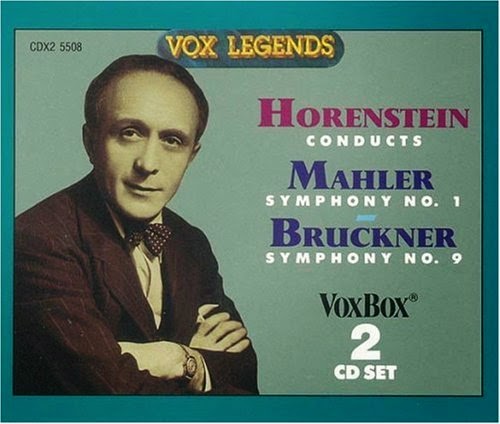
--Jascha Horenstein / Vienna Symphony Orchestra--Mahler Symphony #1 (Vox)
For Nessa news and inquiries, Chuck Nessa can be reached at nessarecords@charter.net. Or visit the website.
You can reach Peace & Rhythm at peaceandrhythm45@gmail.com.
Post author: Andujar
Friday, May 23, 2014
Peace & Rhythm's Interview with Larry Grogan of Funky 16 Corners
We're kicking off our new interview series with a fantastic funky gentleman from New Jersey named Larry Grogan. If you've ever read his popular blogs Funky 16 Corners and Iron Leg you'll know Larry as a passionate music fan of 60s & 70s funk, soul, garage and pop. An avid collector, groovy DJ, familyman and all-around excellent dude, Larry is a walking encyclopedia of old-school 45s. We highly recommend that you bookmark his blogs. Here we present our brother in soul, Larry Grogan:
(photo by Eilon Paz, Dust & Grooves)
Could
you give us some background on your early life and how you found this music you
passionately write about?
I grew up in NJ during the 70s. My father was a
full-time teacher and a part time musician. There was always music in our
house/family (mostly jazz and classical before I started buying my own records)
and we were all encouraged to play an instrument as well. I started out on the
trumpet when I was in grade school, but as soon as I fell in love with rock’n’roll
I got a drum set.
Tell our readers about your bands you played in. Did these bands appear on any records?
I had a bunch of bands during and right after
high school (mostly hard rock) but after getting deep into 60s garage and
psyche my brothers and I formed the Phantom Five in 1984. We played 60s garage,
folk rock, mod and some psyche stuff on the NYC garage scene. We recorded and
released a four-song EP ('Great Jones Street') in 1986 and then recorded a
second EP in 1987 that never made it past the cassette stage.
Could you tell us about your experiences with print zines? What are the best and worst things to you about switching from print to online?
I started doing zines in 1984, first with Incognito
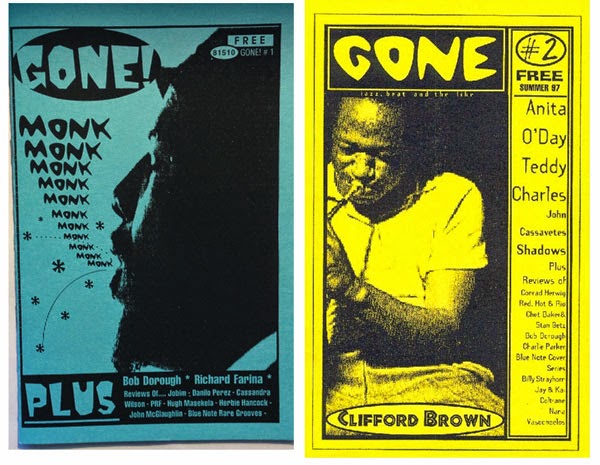
(1984-1987) Evil Eye (1988 – 1996), then a few issues of a jazz/Beat Generation
zine called Gone (1997/98). I sold them via consignment in NJ and NYC record stores, through the zine store
See/Hear in NYC and through the mail.
Funky16Corners started out in 2000 as a kind of
on-line incarnation of a zine.
If on-line as a downside, it’s the ephemeral
nature of it, i.e. unless you make an effort to keep things uploaded and
current, they can disappear, whereas a printed zine gives the reader something
in hand. On the plus side of things, the on-line format allows for a lot of
multimedia possibilities. I can use color pictures, post sound files/mixes, and
link to outside sources of information. Counting the archived episodes of my
radio show, I host a couple of hundred mixes at Funky16Corners, mostly by me,
but also including guest mixes from my yearly fundraisers.
You have two blogs, Funky 16 Corners and Iron Leg. What is the basic theme for each one? Why two instead of some kind of combination blog? When did you start these blogs?
I moved from the web zine format of
Funky16Corners to a blog in 2004. I started Iron Leg in 2007.
Funky16Corners covers a fairly wide variety of
funk, soul, jazz, R&B. I originally came from a ‘mod soul’ vibe that
encompassed everything from late 50s R&B, to soul jazz (especially Hammond
stuff) on through ‘classic era’ soul and Northern Soul-style stuff. I have also
written about disco, breaks/samples, and of course funk.
When I started Funky16Corners I was also writing
about pop and rock music, but decided pretty quickly that I ought to narrow the
focus to soul/funk.
I have been a collector/fan of 60s
garage/mod/psyche/pop since the early 80s, and still listen to/dig for that
kind of stuff, so in 2007 I decided that I wanted to write about that music as
well, and Iron Leg was born.
The blogs have pretty distinct audiences, but I’ve
found that there’s a lot of crossover as well.
Obviously your blog posts are in the spirit of spreading the music, with your writing about the tune as well as a digital file to listen to. However, have you run into any trouble with an artist or publishing company wanting you to take anything down?
I have been extraordinarily lucky in that
respect. Whether it’s because artists realize that I post the music out of
respect and a wish to spread the word, or the fact that much of what I post is
really old and out of print, I have never run into those kind of problems. Once
I had the son of an artist write to complain about my posting a song on Iron
Leg, but once I explained to him that I had purchased the music on-line and as
a record, and my intention was to raise consciousness about his father’s music,
he changed his tune.
I have been contacted many, many times over the
years by artists and/or their families and they are universally thrilled that
someone out there cares enough to keep the sounds alive for a new generation.
I know that it may not stay that way forever, but
I just keep on keeping on and hoping for the best.
What would you say about the overall response to your blog activities?
Very positive. Funky16Corners will celebrate its 10th
anniversary this fall, and I’ve had a number of younger bloggers tell me that
my site was the inspiration for them to get into the game, which makes me
extremely proud. That, and the number of DJs/diggers who have given thanks,
either in person or on the web for the music and stories I’ve shared.
Have you ever thought about compiling a book?
I actually have, and right now I’m in the process
of figuring out what form that book will take. I want to do anthology of
writing from the blogs, but have to decide how to present it.
How often do you get out to DJ? What are some of the things about DJing that you find to be the best and worst for you?
I don’t get out nearly as much as I’d like.
Unfortunately, where I live (Central NJ) there isn’t a lot of demand for the
kind of music I play. I have traveled a lot to spin, up in NYC, Philadelphia,
Washington, DC, Massachusetts, Richmond, VA but having two kids (I’m a stay at
home Dad), and the lack of real money involved limits the amount of travelling
I can do.
I love to DJ though, especially when you have a
room full of people that are down to dance. There’s not much of a downside.
People complain about folks making weird requests, but it’s not really enough
of a problem to waste time worrying about it.
What
about the Funky16Corners Radio Show? What are your feelings on the radio medium
now, and on the internet as a medium?
I love doing the radio show. I’m old enough to
have grown up when commercial radio was still important, and to have
experienced the 1980s rise (and fall) of college/alternative radio first-hand.
I’m one of those kids that used to sit up listening to my radio late into the
night, dreaming about being a broadcaster myself. The internet has been the
great democratizer, in that anyone with access to the basic technology can put
together a blog, or a podcast. The hardware required is relatively small
potatoes, and the software isn’t hard to learn.
College/public radio is really the last
off-internet frontier where people can really say something interesting.
Commercial radio, and unfortunately satellite (which has really been a missed
opportunity) are both dead in the water.
Podcasting is really amazing in that you can
pretty much do/say anything you want to. I look at my show as an educational
opportunity in the same way as the blog. I get to turn people on to things they
may not have heard, or remind them of something they haven’t heard in a while.
Either way, it’s another outlet to get those good sounds out into the ether.
How supportive are your family members of your collecting, blogging and DJing?
My wife has been very supportive. We’ve been
married for 14 years this year, so she’s been around for everything but the band/print-zine
years. My kids both love music, and they know they’re not supposed to touch the
records, so that’s all good.
I’m not irresponsible with my time or money (both
of which I’ve seen get out of hand with record friends), and I’ve managed to
find a nice balance between records/record related stuff and real life.
Are there any other blogs that you enjoy reading? Would you like to shout-out any other writers?
Yes. Though a lot of great blogs have gone under
in the last few years, I always check in with AM Then FM, Echoes in the Wind,
the B-Side, Fleamarket Funk, Heavysoulbrutha’s Put the Needle On the Record,
The Hits Just Keep On Comin' and Soul Sides (you can find links in the
Funky16Corners blogroll). They’re not all funk/soul related but they all make
for interesting reading.
What are the most and least enjoyable aspects to digging for records?
The most enjoyable aspect for me is discovery. I
have very far reaching tastes, so I can usually find something new to listen
to. The least enjoyable thing for me is how competitive some people are about
their digging spots and the commerce of records. There are too many people who
have decided to spend the bulk of their time buying to sell, instead of buying
to hear. I always share my spots. There are more than enough records out there
for everyone. If I come up with more from any given spot than someone else it’s
because I’ve taken the time to educate myself.
How big is your vinyl collection and what other types of music beyond soul, funk and garage that we may find healthy doses of?
I have maybe three to
four thousand 45s and a couple of thousand LPs. In addition to the styles you
mentioned, I have a LOT of jazz and pop, some folk, country, classical.
How do you manage your time when it comes to your blogging projects? You seem to be pretty regular, but do you ever get stressed about the blogs? Have you ever taken a vacation from it?
Right now, I generally do three posts a week at
Funky16Corners, one post at Iron Leg, a weekly radio show/podcast at F16C and a
monthly podcast at Iron Leg. I record and photograph vinyl as it comes in, so I
have a huge stockpile of raw material ready to be blogged, and try to keep a
couple of weeks’ worth of posts done ahead of time and a few weeks of the radio
show pre-recorded. If I know I’m going to be away, or have a big project coming
up I’ll try to increase those numbers to give myself some breathing room.
The only time I scaled back was to deal with a
family health crisis a few years back.
Have you ever worked on compilations for labels?
I have not. I’ve provided info and gotten thanks
on a couple of things but that’s it. I’d love to compile something.
If you could put together a fictional Funky 16 Corners Soul Revue, who would you want in the concert? How about for Iron Leg?
A Funky16Corners Revue would have to include Otis
Redding, Eddie Bo, The Meters, Sam and Dave, Curtis Mayfield, Eldridge Holmes,
Homer Banks, Betty Harris, Laura Lee, Irma Thomas, though I could probably
spend several hours just interviewing Allen Toussaint.
For Iron Leg it would include Curt Boettcher, Van
Dyke Parks, Brian Wilson, the Sonics, UK bands like the Action, Manfred Mann,
the Pretty Things and several dozen one-off US garage bands from the 60s.
Are there any contemporary bands or artists that have captured your ear?
The only ‘of the moment’
band that I dig is Tame Impala. I do like some of the modern Afrobeat groups,
like the Budos band, Antibalas, The Public Opinion Afro Orchestra and Ikebe
Shakedown. The last modern band that I really flipped over was Stereolab (which
isn’t that modern…). I find that I spend a lot of my time tunneling into the
past, doing what I can to bring forgotten/neglected music to light. I’m sure
that there’s more new music out there that I’d like, but I don’t really have
the time for it.
What are some things that you are looking forward to this summer?
Nice weather, spending time with my family and
hopefully spinning some records.
Besides the music, what are some of your other personal interests?
I love to read, any music history, Beat
Generation and related, watching old movies.
Could you recommend a favorite current restaurant or two?
Well, if you find yourself in Central New Jersey,
you should hit the Saigon Bistro in Howell, NJ (for pho and summer rolls) and
Babur Garden in Ocean Township for Afghan food.
Name a few records that you count among your all time favorites:
Hmmm….As far as soul/funk goes:
Roger and the Gypsies – Pass the Hatchet
Pts1&2 (Seven B) --My all-time favorite 45, by the New Orleans group Earl
Stanley and the Stereos with vocals by none other than Eddie Bo.
Rex Garvin and the Mighty Cravers – I Gotta Go
Now (Up On the Floor) (Like)
– One of the most powerful, relentless soul 45s
ever made. Brilliant and always gets the dancers moving.
Barbara Banks – River of Tears (Veep)
--Amazing
Northern Soul, also recorded (with a drum break!) by the Royalettes.
Toussaint McCall – Shimmy (Ronn)
--Searing organ
instrumental by a performer better known for his deep soul ballads.
Homer Banks – 60 Minutes of Your Love (Minit)
--Amazing Memphis soul (written by Hayes and Porter) by a hugely underrated
singer/songwriter.
Eldridge Holmes – A Love Problem (Decca)
--Amazing,
heartfelt ballad from the great New Orleans singer.
You can hit Larry up at funky16corners@gmail.com.
You can reach Peace & Rhythm at peaceandrhythm45@gmail.com
Post author: Andujar
Subscribe to:
Posts (Atom)